|
Epoxides from The Unending Quest by Pau Dukes
Available from Amazon in JP, CA and AU. See a related video on YouTube. 2. Friendship with Ghosts This is continuation from Episode 1 'Bad Start' which you may want to read again before you read further.
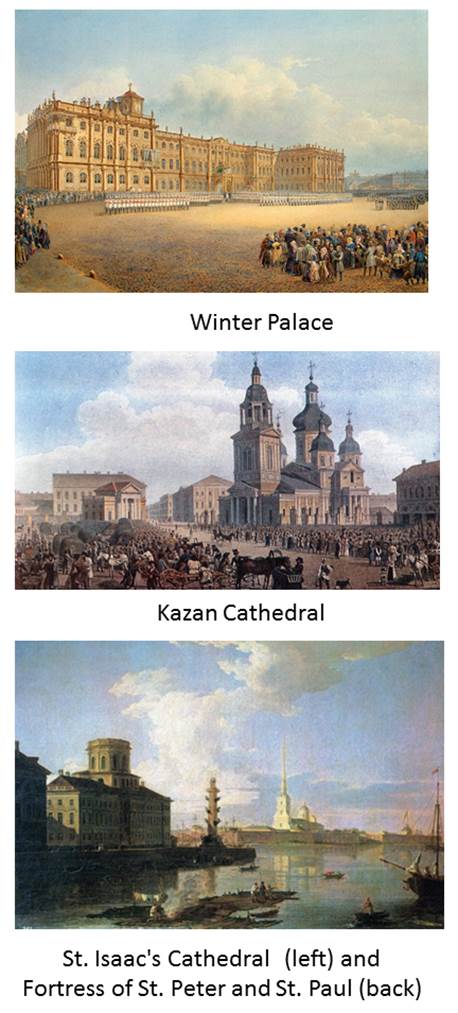
Young Paul Dukes finally reaches St. Petersburg, aspiring to study music there.
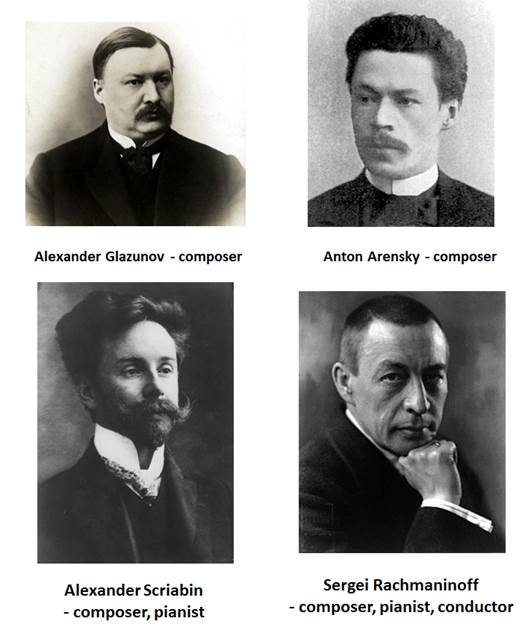
He enters the Conservatoire which stood next to the famous Malinsky Theater, dazed by the names of celebrate musicians whose acquaintance he eagerly begins to seek:
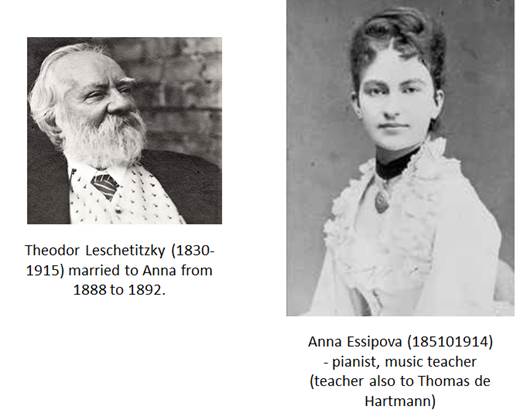
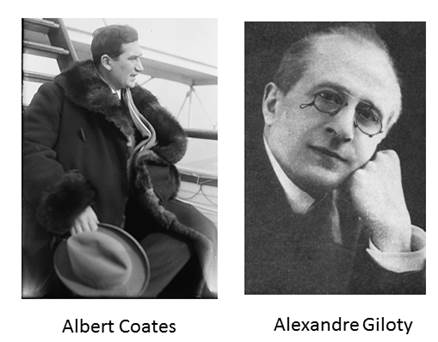
Dukes learns piano privately from Anna Essipova, who was one of several persons among the persons he met who, unlike he, possessed a quality of presence coming from the harmonized development of three parts in oneself. Later, Ozay's teaching reminded Dukes of Ozay. Indeed, Essipova was a teacher to de Hartmann who later collaborated with him in musical composition. Reason and logic were the basis of her system. From Anna Essipova I learnt the great truth that in art—and by analogy in life—the most convincing expression of emotion is achieved through thought and calculation and the careful measurement of effect. In listening to any exquisite performance the wonder of its musicianship became infinitely enhanced when I realized that the perfection which I had formerly imagined to derive exclusively from some vague principle called 'feeling' was in fact the product of meticulous thought and deliberation guided by taste. . . . Anna 'Essipova first opened my eyes to the logic of beauty and to the beauty of restraint, both strange doctrines to me, for I had imagined the basis of artistic expression to be 'emotion let loose'. The principles she laid down for music I found no less applicable in other domains. 'Abandon should come last, not first,' she said, 'in music as in love. . . . Her tuition was an education in itself. At first appearance her manner was stern, even overawing, for as a disciplinarian she was exceedingly strict. There was much of the masculine in her, her most famous pupils were renowned both for the power and delicacy of their performance. The poetry in her flowered from virile roots. She told me once that her teacher and ex-husband, Leschetitzky, had impressed upon her that every artist 'must be both man and woman'. After having learnt that his capacity cannot develop beyond that of a salon pianist, his interest turns to orchestration and begins to assist Albert Coates as his musical secretary and develop career as a coice trainer for the performers.
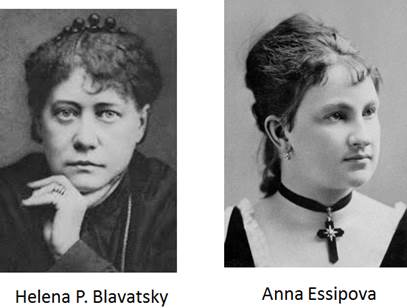
Under an influence from Anna Essipova and because of the general trend, Dukes intensifies his interest in theosophy, occultism and spiritualism. Anna Essipova, anxious to brush up her English, asked me to stay after my piano lessons to read with her and correct her pronunciation. She was fond of ghost stories. A friend of hers used sometimes to join us, and they would argue about whether the stories were true or not. Essipova said she didn't care as long as the stories were good, but her friend took the matter more seriously. She was a theosophist, like my old friend de Lazarec of Riga, and brought me The Secret Doctrine and other books by Madame Blavatsky to read.
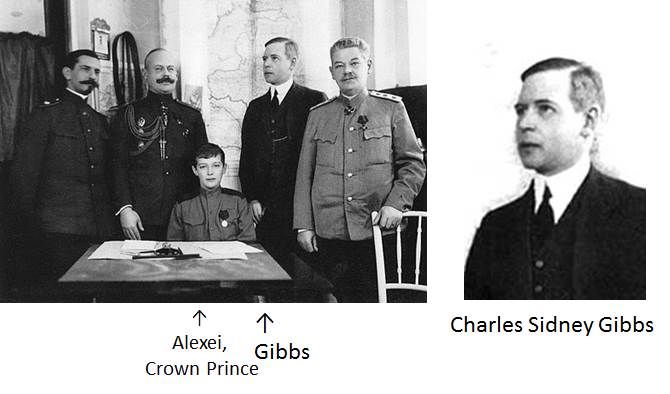
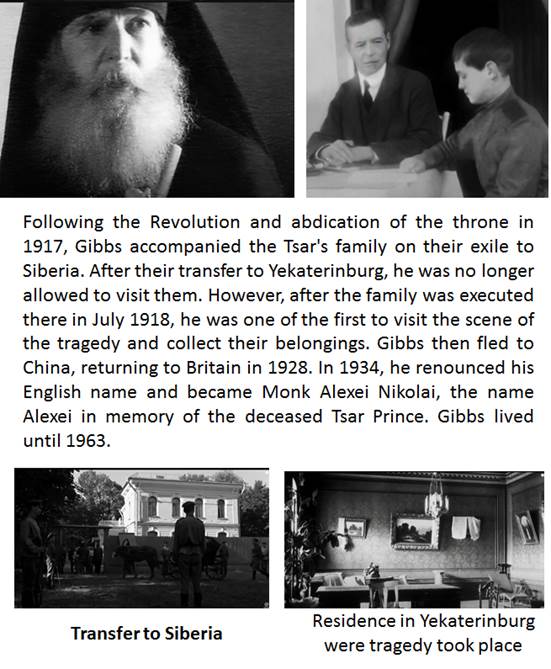
One day, he was asked if he would like to join a small group for spiritual séances by Charles Sidney Gibbs, an English tutor to the to the royal family.
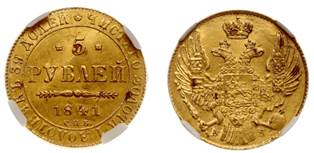
Dukes was taken by Gibbs to a house in St. Petersburg where he was introduced to Mrs. Holey, who was the medium, Mr. Holey, and Miss Holey. With Gibbs and a few others, the Holeys had been doing séances using a channel that Mr. Holey could establish with the spirit of Edward, her former husband or lover, but this link, as Gurdjieff later described in a certain chapter in the Beelzebub's Tales, had to be filled up by what he called Hanbledzoin and what they called 'physic fluid.' So, the successfulness of contact depended not only with the capability of Mrs. Holey as medium but also on the quality of a small group that she needed to form around her and be connected with the holding of hands. Since the few others that they worked with had not been quite harmoniously in tune, the Holeys and Gibbs were looking for someone else; so Dukes was recruited. The principle is the same in case of a small group work that was formed around Gurdjieff. On one hand, there is a need for a certain number, the minimum of which, for successful contact with a higher force with the Movements, for example, is often said to be 12 after the example of Jesus; on another hand, there is a need for quality; as sometimes a small group may also bring about miracles; but the result of a group work cannot be measured by its continuation or the appearance of harmony as in the case of what internally was produced by the conflictual relations among Laurence, Frida, Mansfield and Murry. In the case of this group of five formed around the Holeys, a particular weakness seemed to be that although Mrs Holey appears to have had a good reason to wish for sustaining contact with Edward, and her husband and daughter seemed to understand it to a degree, the motive was kept hidden, and soon the Edward's control over the channel dis not remain stable as he had to protect it together with his roguish partner spirits against the attempts of more evil spirits to take over. Empowered by the young psychic fluid from Dukes, the group prepared the space and waited for contact: 'It's beginning,' said Holey. We became tensely expectant. The table seemed to be tilted. Not surprising, I thought to myself skeptically. Since both Mrs. Holey's hands and one of mine and Gibbes's were removed the three remaining pairs of hands were all on one edge of the table. It was tilted again—yes, definitely on that side. But it righted itself and tilted slowly in the other direction—not directly opposite but obliquely, as it had three legs. It might be pushed, I said to myself . . . Gradually its motion increased. It tilted this way and that, and after a while it was raised an inch or so from the floor, subsiding with a little thud. Finally, after some time, with a quick motion it rose vertically a foot or so into the air and remained poised. (from Chapter 4) In the beginning, they were verbally asking questions to the spirits and getting answers by raps; either yes or no. Soon, however, they begin receiving letters from the spirits: 'Hst! Do you hear that?' In the tense silence we detected a faint scratching sound. 'Sounds like a mouse,' I ventured. 'A mouse! Do mice scratch on ceilings?' We listened again. He was right. The sound came from the ceiling, not the floor. A faint, irregular, persistent scratching. 'That's writing,' said Holey with conviction. . . . To me the communications meant little. To the Holeys they appeared to mean something, references perhaps to things of which Gibbes and I were ignorant. (from Chapter 4) Dukes could read the signature of Edward in the letter, which convinced the Holeys about the identity of the spirit. It appeared that some other spirits could not sign sign their names. They delivered their letters unsigned. As soulless entities, were they unable to have their names or identities? Does not this remind you of similar cases in digital communication? While the channel was well maintained at the other end by Edward, he and other spirits were friendly enough to deliver presents or music: We were not allowed to keep all the objects that appeared. An amusing instance was that of coins. A large number of antique coins were dropped on the table with a clatter. An accompanying message said we might handle them during supper, but only on the strict understanding that when the session was resumed they should be replaced on the table to be returned whence they had come. The reason given for this attitude to the currency question was that 'the old man with the coins' (whoever he was) was a 'miser'. He liked to show off his collection, but it was all he possessed and he refused to part with it. . . . eventually after many requests we were each presented with a single coin as a mark of favour. Mine was a five-copeck piece of the reign of Nicolas I, and I kept it in the stamp box as long as it was in my possession. (from Chapter 4)
They had to terminate the séances as Edward began to have difficulties in resisting attacks interferences from stronger spirits that attempted to overtake: His difficulties seemed to increase for all that. Repeatedly he warned us against a certain 'Three Xs', who he said was an enemy. No explanation was given as to who this strange newcomer was (or had been) or why he was so designated. As I have remarked, nicknames appear common in those spheres. All we could infer was that he was some unruly fellow, a sort of spectral gangster, who was definitely bent on mischief, so we were warned, against Mrs. Holey personally, though for what reason was never explained. (from Chapter 4) The last séance had to be aborted as an arm that appeared from darkness gripped Mrs. Holey in an attempt to pull him down. The grip was released as Dukes intervened.
In view of what was to come, I suppose this experience in communicating with the dead had some significance to Gibbs. To Holeys also, the experience is likely to have meant something. What was it then for Dukes? What satisfaction did he find in relating with Edward and other spirits? The answer could be 'as usual/' It appears that it was the world he lived in. Not quite otherworldly in spite of the extraordinary events that were happening. Radom mixing with random spirits, rather debauch, although may not be outright immoral. This mat look quite pore only for someone who knows that, following a similar procedure under similar settings but with a different intent. a group can seek something of quite a different order. So, already, it is difficult to judge whether Dukes's quest was in search of or in rejection of something higher. Lev Lvovitch, who later brought Dukes to Ozay, told him: 'What you have to ask yourself is, how much does it matter to you? And to answer that, I would advise you to recall what Jesus said to the man who wanted to bury his father: Leave the dead to bury their dead.' '[if] in the post-mortem existence the personality continues fixed, which would mean stagnation . . . why have anything to do with it if you yourself hope to progress during this life? or else [if] it continues to develop . . . why molest it by dragging it back to contacts it has discarded?' (from Chapter 5) However, it must have appeared to Dukes that such friendship was all. His repeated use of the word 'friendship' appears disgraceful when he applies it to someone who had something that was missing in him and that he was not interested in having: my friendship with Lev Lvovitch. my friendship with White Lady of the Stars, and so on. They were kind to him knowing well that no true comradeship was possible with him (yet or possibly forever). Only with Ozay, he refrains from using this term as Ozay made it clear: 'Young man,' he said, sternly reproving, 'I could kill you in an instant, sitting here, without either of us moving a muscle.' I stared at him in amazement, unbelieving for a moment. But there was that in his tone and manner which carried conviction. (from Chapter 6) Plavan N. Go |