|
Epoxides from The Unending Quest by Pau Dukes
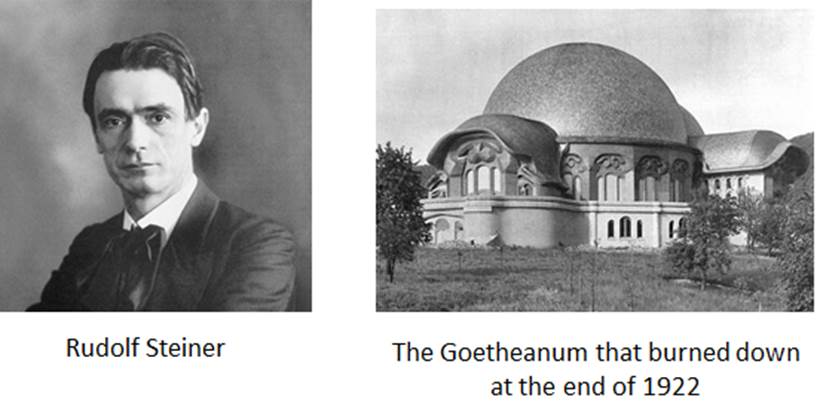
Available from Amazon in JP, CA and AU. See a related video on YouTube. 5. Up out of Egypt This is continuation from Episodes 1, 2, 3, and 4. "Up out of Egypt I have called my son." Who was the White Lady of the Stars who repeatedly reminded Dukes of the above phrase, that appear in both in the Old Testament and the New Testament? She is known to have been a friend to Rudolf Steiner. She told Dukes that she was with him when the Goetheanum was burnet.
Her high opinion about him but not to his followers suggests that she separated from the group of his followers after his death. She lived in the suburb of London with her mother when Dukes first her. Her remarkable accomplishment in astrology had been acknowledged by experts and nobles, but in spite of the imagination of people, which probably included Dukes, that this should have enabled her to make a fortune if she wanted to, it conversely put her into a difficult situation, as she refused to receive money for the truth she told from someone who asked for it but would not receive it, typically someone like Dukes, so she had to accept her destiny of dying alone in poverty. She was probably still in her thirties when she died in 1937. Bu the way, Gurdjieff was in a very similar situation at that time after many of his old followers had been found unable to progress further and his attempt to restart in America was aborted by what looked like a major boycotting from his own followers who preferred a milder teacher, an Uncle Moon, like A. R. Orage and P. D. Ouspensky: Gurdjieff told the following to the group in New York on November 5, 1934: .He is not a teacher . . He is evasive, and I have never yet heard him give a direct answer to any inquiry, however sincere and straightforward the question may have been. When not evasive, he blusters; in these bullying moods there is more contempt for his followers than of animosity, but in any case it is scarcely an attitude conducive either to loyalty or to successful instruction. It may well be that he does not wish to instruct---others besides myself have received the idea that he knows much but isn’t telling---and my own view is that, insofar as he desires to assist anyone, his principle is that this cannot be done through intellectual information. (from ORAGEAN VERSION by C. Daly King) Although
in a different language, C. Daly King is repeating the youthful protest of
Paul Dukes in the spring of 1914 against the experience he had in the cathedrals.
C. Daly King is nasty in his protest and his justification of not following a
man hike Gurdjieff, that he suggests, in the same book, that he has gone nuts
after the car accident he had in July 1924. The same rumor was spread by P.
D. Ouspensky, and Dukes is likely to have eaten the poison as an excuse of
his avoiding to meet him him, although I don't think he has believed in the
story. Gurdjieff, upon But when finally, at the end of 1930, I arrived in New York and on the first day I happened to find myself among a large number of Americans, followers of my ideas, and when I observed the same phenomenon also among them, then this produced such a deep impression on me, and the force of reaction was so strong, that it provoked a cold shivering similar to that which takes people who are afflicted by the so-called yellow malaria of Kushka. I then even, to "throw dust into their eyes," increased my usual habit of joking in conversation in order to hide this inner state of mine from the people around me. . . . During the reading . . . while sitting in the corner and observing out of boredom the expressions on your faces, it seemed clear to me that there stood out on the forehead now of one, now of another of you, the inscription 'candidate for the madhouse.' (recorded in Life is Real Only Then When 'I Am') The situation remains exactly the same. Motives behind people's interest in so-called spiritual practices and esotericisms could be so strange and often insane that make me afraid of receiving inquiries from people: A slow musical voice with a slight break in it answered the telephone. I asked if I might call. There was a long pause, so long that I thought my interlocutor must have deserted the phone. But the voice said eventually: "Please say that again." I repeated it louder. A . . . "Why do you want to come and see me?" I replied that I understood she had known Steiner, whose books I admired. At this there was a long-drawn-out "O-oh", and a further wait. I began to feel embarrassed by these eerie telephonic silences. I was still more embarrassed when she said next: "Will you please say something more?" "Something. more?" "Yes, anything." "I'm afraid I don't quite . . ." (from Chapter 13) What was she doing? You don't see? She was straining in vain to catch what what Prince Ozay called the reechoing of the Name. It's another name is Logos. as its vibration comes from s comes from strivings that take place logically according to the Law of Three and the Law of Seven. Now Dukes cannot logically explain why he wants to meet the White Lady or what he wants to discuss about Rudolf Steiner. But could he ever be able to logically explain the reason of his interest in various subjects and the motives behind his endless quest? He cannot be quite logical because, besides his body, he has nothing else than a body of illusions, and unlike real higher bodies that dome do indeed develop, this illusory substitute is not a lawful result.
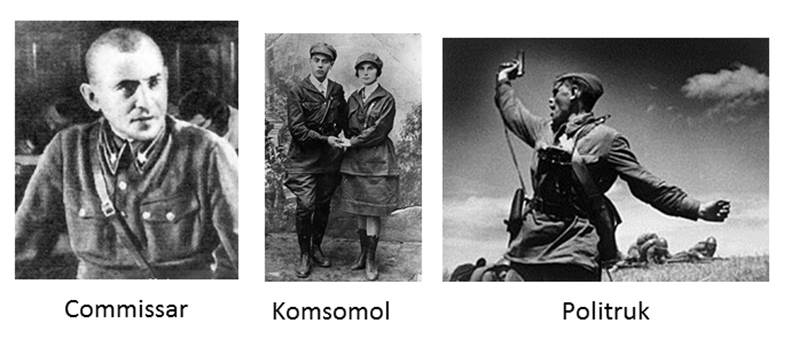
How low Dukes came down from the time when he became absorbed in the practice of what Prince Ozay called "misapplication" through the imitation of Lev Lvovitch, Lion, a comrade of Prince Ozay evidently from the days he spent in Central Asia, and whose intent was to redirect the reechoing of the Name toward the above, with gradual increases in pitch and intensity, the ascent of which often manifesting itself as trembling vibrations in the body, with increased awareness of death and also of life, an essential part of some of the sacred dances later produced by Gurdjieff (example) and also introduced by Osho into his most widely practiced active ,meditation technique. The door opened and the Lion appeared. He looked round and said in a tone of feigned severity: "What's this mean? Have you come to a funeral? Why do you wait for me before you begin work?" He nodded to Serge and me, and went on: "Well? What about it? Now! All together!" An astonishing scene ensued. Rather shamefacedly everyone began to yawn and giggle, but when the Lion said "All together" they yawned more daringly—brazenly, one might say—stretching their arms overhead, and either yawning naturally or doing their best to simulate, ending their efforts with spontaneous laughter . . . "Good spirits, come and help. You must help. You will help. Serge's knee must move—it must shake—vibrate!" (from Chapter 5) When Dukes imitated it in a Russian village, it was not the same anymore, He copied the procedure from Lion but the way he applied it appear to have been mostly toward suppressing symptoms and more in the context of hypnosis in the Gurdjieff's story of the Magician and the Sheep: At last the magician found a remedy. He hypnotized his sheep and suggested to them first of all that they were immortal and that no harm was being done to them when they were skinned, that, on the contrary, it would be very good for them and even pleasant; secondly he suggested that the magician was a good master who loved his flock so much that he was ready to do anything in the world for them; and in the third place he suggested to them that if anything at all were going to happen to them it was not going to happen just then, at any rate not that day, and therefore they had no need to think about it. So, I think Dukes had a good reason to worry as follows about the boy Petka and others whom he had hypnotized in the Russian village: What can have become of my Russian peasant children, now grown up? Is Petka a commissar, or a komsomol, or a politruk, or something else equally forbidding? Would they remember their not very proletarian but very human Uncle Moon? (from Chapter 8)
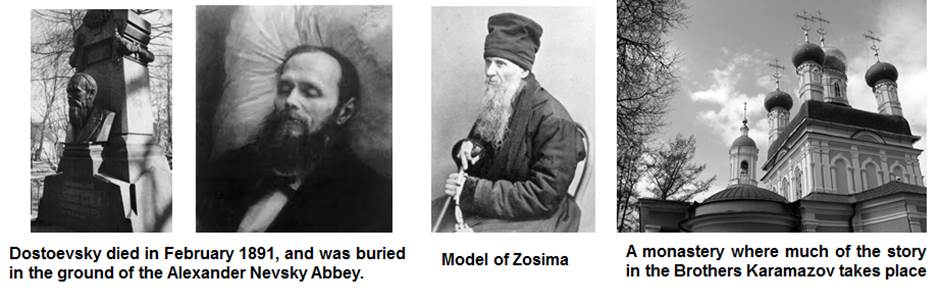
This deceptively humane personality and his enjoyment of popularity among children makes one think of Alyosha, the youngest of the brothers Karamazov, who seems to resemble Dukes also in some other aspects such as innocence, blind faith, and insensitivity of a particular kind similar to the lack of conscience. Dostoevsky's initial intent in writing the Brothers Karamazov was to make the story center around the death and rebirth in faith of this particular Alyosha in the spirit of the seed that has to die mentioned in John 12:24. The author concluded the book without accomplishing this. He was buried in the ground of the Alexander Nevsky Abbey where Dukes had the crucial experience.
Some believe that he was afraid of censor or was intimidated by the death of his son, also named Alyosha. But the indications of Alyosha having to die in his false faith are so abundantly found even in the prematurely concluded book that I find it remarkable that they are rarely taken notice of. To make the long story very short, the second brother Ivan, representing the reason, who initially resisted the hypnotic influence of religion, becomes weak in his mind after the murder of his father under the influence of the idea of sin that comes into his head from Zosima, the master of Alyosha. This drives him mad, causing him to make a crazy confession at the trial of his older brother Dmitri, saying something like hi, Ivan himself, was in sin, responsible for the murder, provoking chaotic reactions, which results in Dmitri wrongly convicted as the murderer. While Dmitri waits in jail to be sent to Siberia, Ivan continues to suffer fatally from madness, and his girlfriend, whose reaction directly contributed to the wrong sentence, plots rescue by bribery. In this situation, holy Alyosha, utterly unconscious of what disaster and confusion his religion caused to his two brothers, is absorbed in making himself a hero among children. The long story ends with his preaching to children and his saying farewell to them with a declaration, "I am departing for a journey." As I discussed earlier, the idea of sin is used by the charge to disorient people, make them believe that they are serving good while serving evil, or believe that they are being saved while they are in fact being doomed. Then, like Dukes himself, one becomes unable to logically explain the reason for one(s own search, explain the motives of one's action, or tell the background of one's interest in this and that. This is the result of downward conditioning that begins in the childhood under the influence of preaching like the following; Christ's insistence on the obligation, when forced, to fight and do violent combat for the right—"Think not that I came to send peace on the earth, I came not to send peace, but a sword" followed the lint of Krishna's Injunctions to his disciple, Arjunã, not to shirk battle when that disciple, feeling his foes to be his brother, had believed it wrong to fight them. Thus Krishna: 'If you refuse to fight this righteous war you will turn aside from duty, you will be a sinner, and disgraced. . . . Stand up now, and fight , On the other hand the special exercises contained in the Sermon on the Mount and other portions of Christ's teaching—not to resist evil but turn the other cheek, to pluck out eye and cut off hand that offend, to confine speech to yea and nay, to take no thought for the morrow—all such exercises are essentials of Yogic training, like other severe disciplines, and are to be found in one form or another throughout esoteric teaching of the Ancient Wisdom . . . (from Chapter 17) The constantly repeated message is; don't think, follow orders from the above, this is spirituality: In The Song of God [Bhagavad Gita] this same idea, that whatever the seeker after salvation achieves by his efforts and sacrifice he still remains totally indebted to his Lord and unworthy of even the slightest recompense, is severely stressed. "You have no right to the fruits of your work. Desire for fruits must never be the motive, but perform every act with your heart fixed on the Lord of Heaven. Be even tempered in success and failure, for it is this evenness of temper which is meant by Yoga. In the calm of self-surrender the seer renounces the fruits of his actions, and so attains enlightenment." (from Chapter 17) This is the utter opposite of the ascending principle which Lev Lvovitch stated in such a simple term that Dukes failed to give sufficient notice to it: "Have some tea and cake—in an hour it will be talking. Aren't you and I what was yesterday in the grocer's shop? Isn't that a miracle? Why look further for miracles?" (from Chapter 5) This is an essential part of Gurdjieff's ideas that is bound to be missed by downwardly-conditioned teachers and students. P. D. Ouspensky reports Gurdjieff's theory around this without understanding its importance. Katherine Mansfield is again unique in seeming to have understood it even before getting to know anything about Gurdjieff. Read her short story The Baron that presents the controversial subject of people not being equal and provokes a natural desire to know what really makes anyone different from others.
With vagueness about motives, as a result of giving more attention to his body in terms of its capability to adapt, serve, and perform, Dukes and similar-minded ones are unlikely to take much interest in those inner processes, the evolution of impulses inside of them, which lead to the formation of understanding and faith in the principles of life. This is the respect to oneself, one's own body, which Dukes and similar-minded ones do not seem to have at all although they continue to preach it, as they remain surprisingly juvenile in their wanting, and in the sense of themselves.
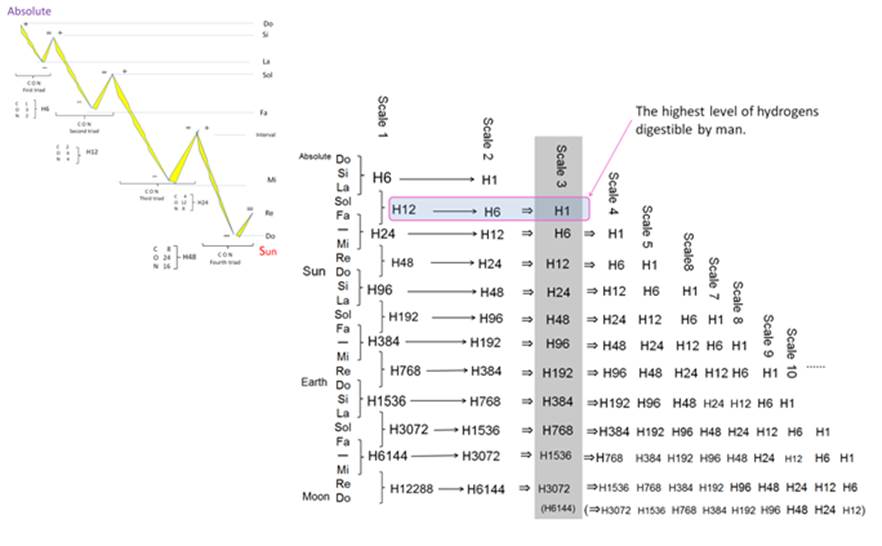
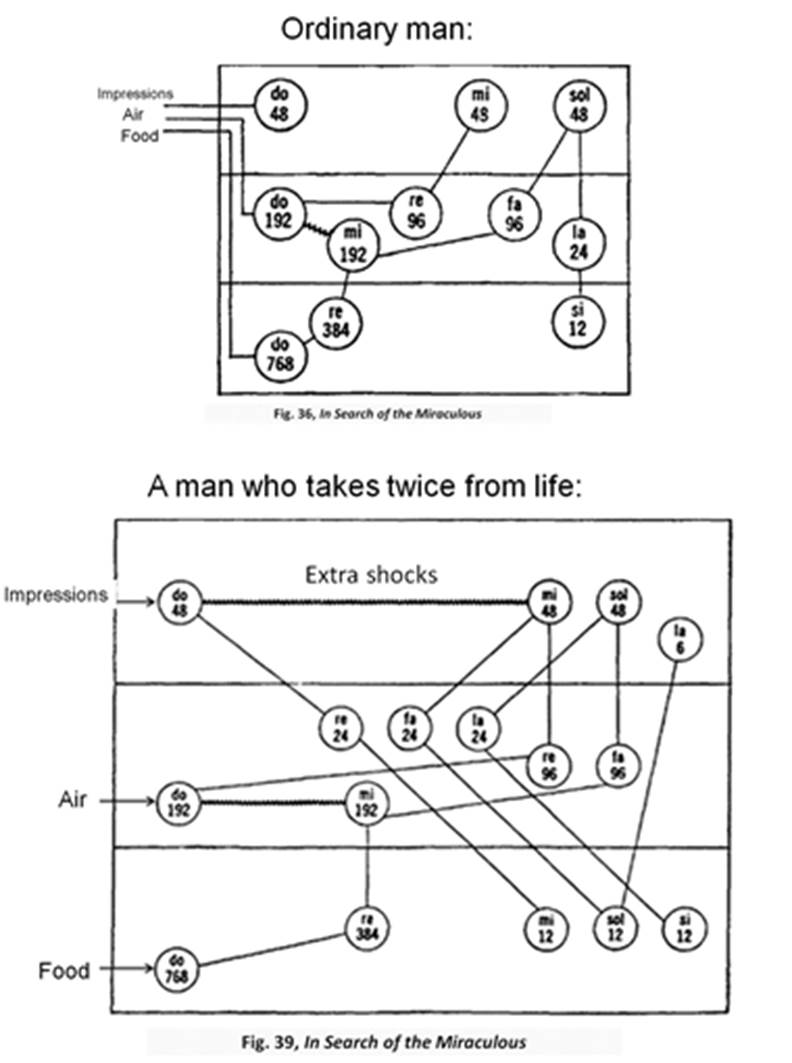
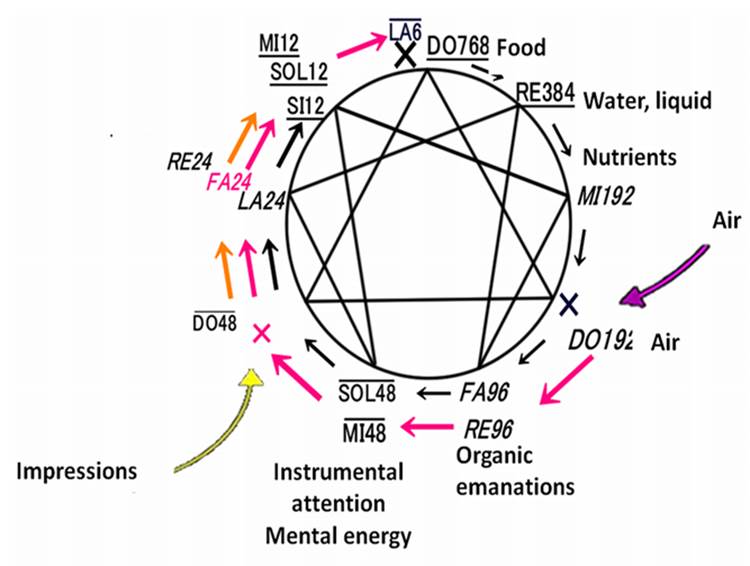
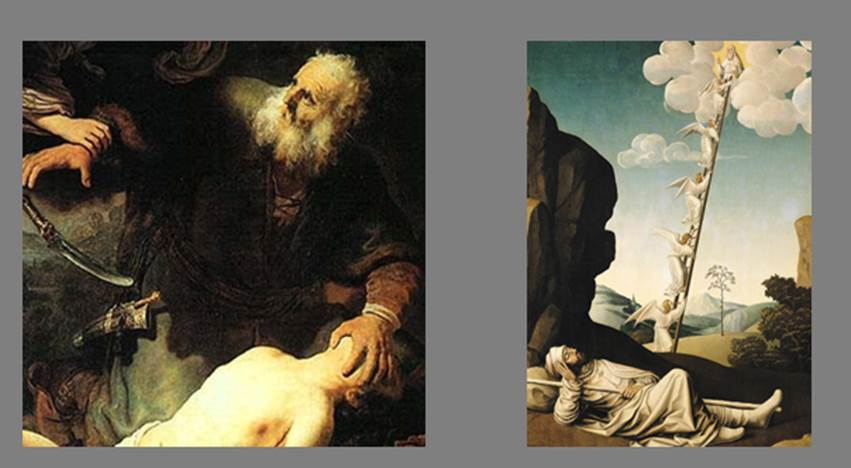
This so-called Food Diagram represents the Gurdjieff's understanding, shared by Lev Lvovitch and Lathering Mansfield, and also by Osho, as curiously affirmed by Goggle AI, but definitely not by Dukes, Vaticanized Work authorities and Fourth Way teachers, of the sayings from Gospel such as the following: I am the gate; whoever enters through me will be saved.[a] They will come in and go out, and find pasture. [John 10:8] I am the way and the truth and the life. No one comes to the Father except through me. [John 10:14] Here, the interpretation of I, suggested by the title of Gurdjieff's last book which he aborted in the middle, Li is real only then when I am, makes the whole difference. The same applies to the interpretation of an anecdote starting from John 8:52 which reveals the true teaching about the Father against the Son, Abraham against Jesus, or I against Abraham: At this they exclaimed: "You, demon-possessed one! Abraham died and so did the prophets. Tet you say that whoever follows your word will never taste death . . . Are you greater than our father Abraham? He died, and so did the prophets. Who do you think you are?" . . ."Very truly I tell you," Jesus answered, “before Abraham, I am!" Gurdjieff rightly regards Jacob or more exactly his mother Rebecca, as the beginning of a flow back to the Father, traveling against the downward flow that emanated from it which drowned their fathers including Abraham: Gurdjieff: "You know the story of Rebecca?" Kanari says, "At the well," Sardine says, "Water." Miss Gordon doesn't know the story either. Gurdjieff: "These Old Testament stories can he more important than all the words of Jesus Christ (from a note taken by Solita Solano) The significance is covertly acknowledged in the mentioning of the Jacob's well in John 4. P. D. Ouspensky, having arrived at repentance at the end of his life and renounced the System and his status as its teacher, acknowledged Jacob as the founder of the teaching that he received from the Magician, covertly referring to Gurdjieff, in the last part of The Strange Life of Ivan Osokin which he wrote in English and had it published immediately after his death. He died in a worthy manner, but his followers, possessed by a desired to take on the role of Uncle Moon, tempted by the fame and popularity, appreciation by British nobles and intellectuals, that he acquired in his life, cancelled his repentance, through the contribution of Madame Ouspensky, praised but probably cunning. James Webb was right in suspecting that it was the old ghost of P. D. Ouspensky, not Gurdjieff, which produced an inclination toward secretism, authoritative, and monopoly that dominated and finally stifled the Work organizations that Salzmann established around her, crowning them with the name of Gurdjieff. This was confirmed and the process was described by James Moore, the historian who wrote an official history in favor of the Salzmann lineage, in his miserably titled autobiography Gurdjieffian Confession - A Self Remembered which she wrote after being expelled from the lineage. So, the story of Paul Dukes and Uncle Moon is not personal. It is part of a colossal phenomenon that continue to happen around a living master and comes in the way of its normal transmission. "Begin in Russia, Finish in RUssia" is what is reported to be what Gurdjieff uttered in relation to his work shortly before his death.
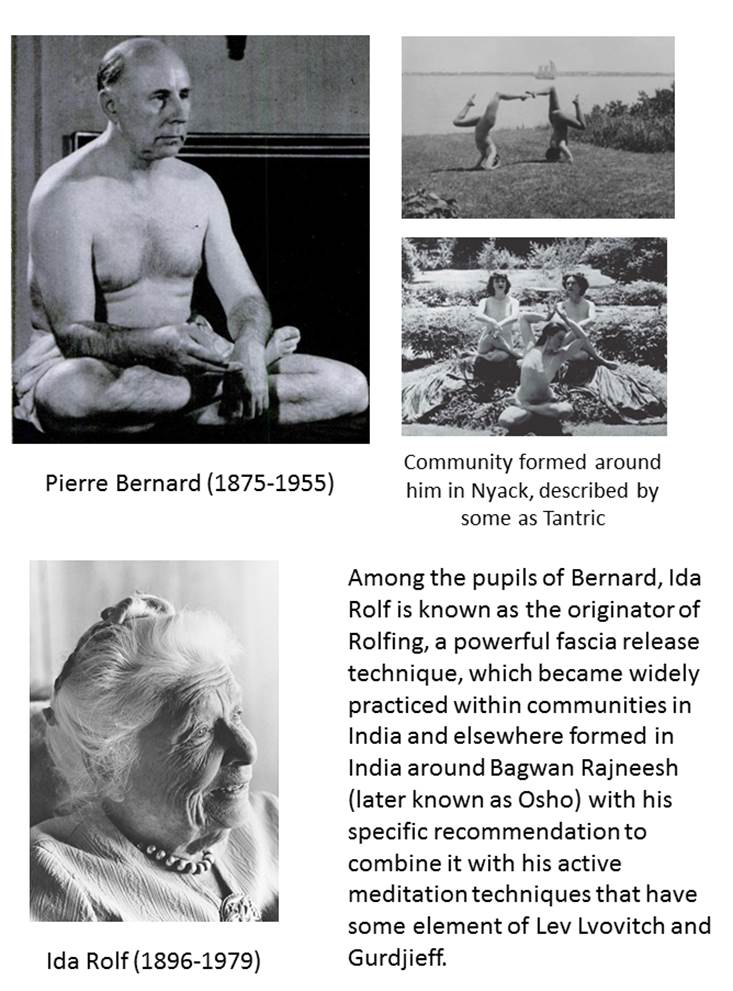
Asked by Dukes, The White Lady of the Stars. gave him some astrological readings: "What a mixture! . . . I shall never get to the bottom of it. . . . You wouldn't like it if I did, I can tell you that .. . . Heavens, what a scamp you are! . . . Or are you only a madcap? . . . Or both? Seeking, seeking, seeking—and fibbing, fibbing, fibbing—to hide your designs and intentions from those around, I suppose. . . .The panorama of men and women! Why can't you discriminate? Why don't you pick and choose better?" (from Chapter 13) The way one attends to matters that concern questions around high and low, issues around authority, lineage, and religion, is closely relates to how one attends to matters that concern questions around man and woman. They are like two dimensions of life with which distortions in one are inevitably tied up with distortions in another as represented by the life stories of Abraham. Gurdjieff tends to be feared and regarded as someone to be avoided because of his penetration into and what looked like intervention into affairs of his followers in this domain, which seemed to have affected the relationship P. D. Ouspensky he had firstly with Anna Butkovsky which he mysteriously finished to get married with a lady who came to be known as Madam Ouspensky, which soon developed into a disastrous relationship, seemingly in a manner that had been warned to him by Gurdjieff, as well as the relationship between the Hartmanns, and the romance between A. R. Orage and Jessie. To freedom-loving modern couples, this would appear as too much intervention into their lives. But, without actively penetrating this sphere of life, how can possibly a man can change? The spirit of doing so appears to have been within the Tantric community in Nyack formed around Pierre Bernard, but the Dukes reports that the attempt was not quite successful in coming close to solving issues between man and woman (as a matter of fact) as in his own case.
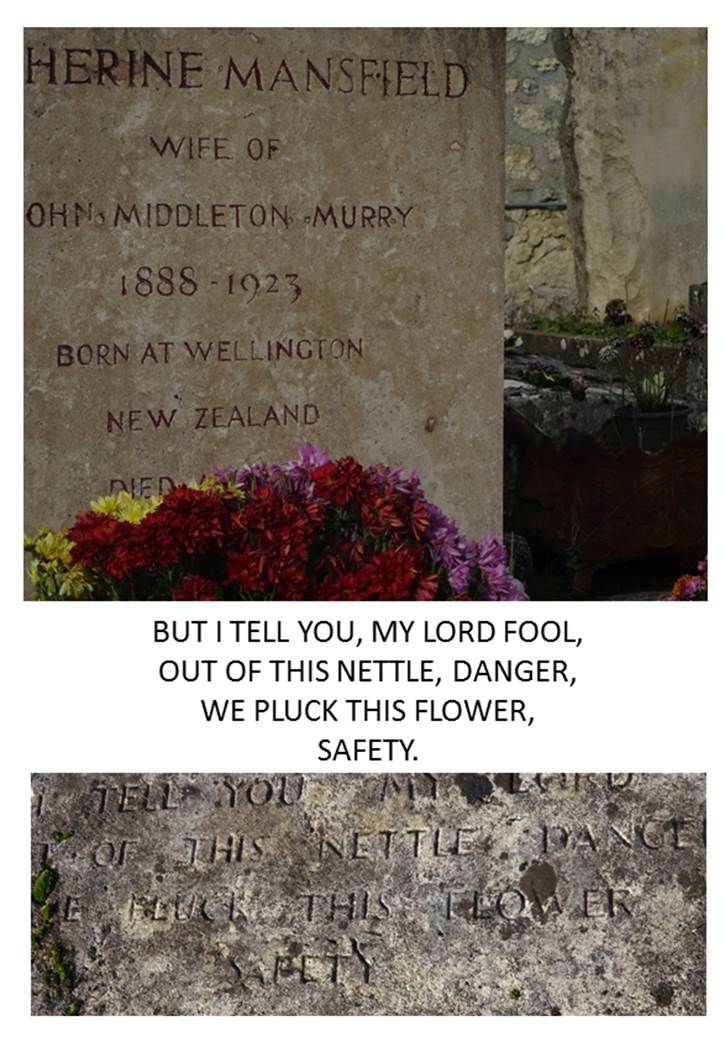
A similar experiment repeated around Rajneesh-Osho in his commune since the late 1970S employed some techniques originated from them like the powerful fascia release technique of Ida Rolf, along with breath-bodywork technique from Reich, and possibly Gurdjieff-derived double-arrow Gestalt exercise from Perls, combined with techniques designed by Osho partially deriving insight from the Gurdjieff's Food Diagram, were infinitely greater in scale and penetration, and the risks it took, had a transformatory effect on me, but its transformative effect came from these techniques brought together and practiced in the same place in the presence of a master. When privately or separately practiced, particularly by someone whose interest lies in becoming an expert, I don't think they have the same effect. Dukes, since he left the Nyack community after his divorce in 1928 began more to experiment with techniques, some he claims to be from Ozay, in seclusion or train himself in his chosen subject, such as acrobat dancing, in a personally arranged chosen private situation,, a tendency that Lev Lvovitch once indicated to him as a characteristic he noticed in some of his clients of rigid personality. Duke's intent behind wanting "friendship" with the White Lady of the Starts seems to be very much in this line as he tells about it carelessly to the reader as "an intended inquiry into the subject of astrology" and confesses that he told as little about himself to her to test her ability. So, these were his hidden motives which naturally made her suspicious and finally desperate. He was not after truth, he wanted something else. "Didn't you beg me to tell you the whole truth as I saw it written in the stars? I did tell you the truth, but you chose your own path. Why should I cast my pearls." (from Chapter 13) Dukes did not take in much of she served him when he visited her at her home; I also had to make allowance for her marked likes and dislikes. She disapproved, for instance, of every association I had ever had with the theatre, especially, of course, my acrobatic dancing, and she was quite nonplussed by my physiological experiments, regarding my strict vegetarianism as a fad. These prejudices on her part inclined me to take much that she said with the proverbial pinch of salt, yet I should have done well to heed some of her most earnest and persistent admonitions. (from Chapter 13) Dukes tells as follows about the nature of his "friendship" with the White Lady of the Stars]; Once more back in London, it was with some hesitation that I lifted the telephone receiver and dialed the familiar Streatham number. Why should I hesitate? I was conscious of a feeling that all was not well with the White Lady. That should not have caused hesitation, rather the contrary. The truer reason was that the ever-present underlying sense of rebellion against her admonitions smouldered even when I knew them to be justified. (from Chapter 15) The way the White Lady of the Stars died, alone, uncared for, fallen from the bed in an untidy room, where bottles of sleeping drugs scattered, does not impress me as disgraceful as, among those who had been with me on the same path, two have died in a very similar situation and there have been also cases of suicide and what may appear as examples of cruel ending, unlike a death in sleep that is hoped by most people. Such are parts of the risks that Prince Ozay mentioned to Dukes as certainly there are risks in knowing the higher. More historically, the creature death of Vivekananda, accelerated by his disinterest in medical treatment, could be the result of knowing something higher from the presence of Ramakrishna, but to have the decay like that is unforgivable as "a sin against the Holy Ghost" according to Dukes preaching in Chapter 11. The case of White Lady's death brings up the memory of the case of Nirvano, the Osho's consort, that preceded Osho's death by five weeks. Although they may appear shocking in the light of the height they have touched or glimpsed, it is so much better to die like that than to die without knowing it, being attached to an illusory body of illusions, like Dukes, as he describes his reaction against the White Lady's persistent him to go to Egypt, obviously urging him to face and be finished with his past: I felt it was but fair to tell her—how true her predictions about my visit to Egypt had been. As she had foretold, my projects had come to naught. And yet here too, post factum, in my heart lurked protest. What ground was there to believe that if I had indeed gone off to Egypt years earlier, as she urged, anything would have been better? Business perhaps—but then there had been no business propositions. As for other things, I can hardly imagine that at any other moment than that of the particular night of my arrival it would have been given to me to behold the Sphinx and Pyramid aflame in the blood-red moon—burning—burning like a vast Burning Bush—the most awe-inspiring spectacle it has ever been granted me to witness. It seemed to me that, for reasons which only Providence could explain, I had to go when I did and in the manner I did. (from Chapter 15) Here, in this particular description, he exposes the contents of his illusory second body. En empty man, who does not take from life, inflates himself with imagined glories, spiritual fantasies, imagined work of Providence . Such a juvenile, derivative sense of self. If he had known life and was taking from it, something like this would have attracted him little. I am the beginning and the end. Dukes quotes this saying at the end of his book as words that are found both in the New Testament and the Baharat Gita. With Dukes, his path, as he acknowledges, started from his meeting with Prince Ozay, and it was a path away from him, which he does not acknowledge, as implied in the saying. With Katherine Mansfield, it was reversed. She first became aware of Prince Ozay, who was Gurdjieff, with information that reached her from Dukes, and she traveled a path that ended in him. The characters of their lives are entirely the opposite. In the cemetery of Avon, her grave that stands next to Gurdjieff's has an inscription taken from the following sentence in Henry V by Shakespeare: 'tis dangerous to take a cold, to sleep, to drink; but I tell you, my lord fool, out of this nettle, danger, we pluck this flower, safety. '
A few weeks before her death, Katherine Mansfield told as follows to P. D. Ouspensky who visited her at yjr Gurdjieff's Institute for the Harmonious Development of Man in Avon: "I know that this is true and that there is no other truth. You know that I have long since looked upon all of us without exception as people who have suffered shipwreck and have been cast upon an uninhabited island, hut who do not yet know of it. But these people here know it. The others, there, in life, still think that a steamer will come for them tomorrow and that everything will go on in the old way. These already know that there will be no more of the old way. I am so glad that I can be here." "Don't protect yourself," Gurdjieff told the group in Essentuki around 1918, "then you can begin." Plavan N. Go |